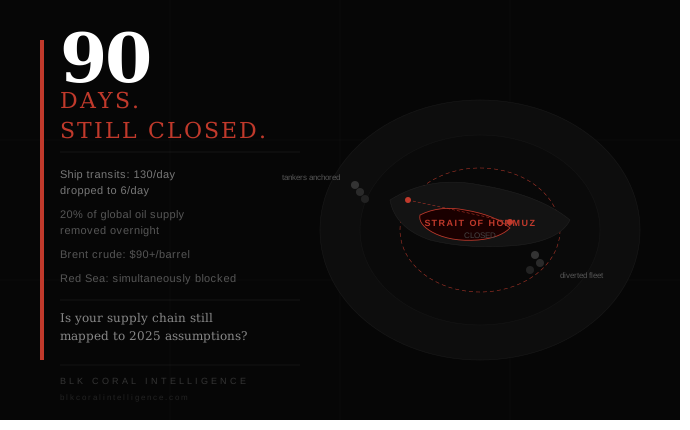
The world's most important waterway has been effectively shut for over 90 days. Most boardrooms still have not changed a single decision because of it.
In February, US and Israeli strikes on Iran triggered the near-total closure of the Strait of Hormuz. Ship transits dropped from 130 a day to just 6. QatarEnergy declared force majeure on LNG shipments. Maersk, MSC and Hapag-Lloyd suspended operations.
The result: 20% of the world's daily oil supply vanished from global markets. Brent crude crossed $90 a barrel. And for the first time in modern history, both the Strait of Hormuz and the Red Sea are simultaneously blocked.
That is not a geopolitical story. That is your energy bill, your freight cost, your supplier's lead time, and your Q3 margin in a single sentence.
UNCTAD has already warned that global merchandise trade growth will slow from 4.7% in 2025 to as low as 1.5% this year. The organizations absorbing that shock with the least damage are the ones that mapped their exposure before it became a crisis.
The ones scrambling right now are the ones whose risk picture was built on the assumption that last year's supply chain was still intact.
It is not.
If your organization has Middle East exposure in your supply chain, your energy costs, or your vendor network, now is exactly the moment to pressure test what you actually know versus what you are assuming.
That conversation starts with a question I ask every new client: if the worst case you have identified actually happened tomorrow, which decision made last quarter would you most regret?
What is your answer?
Black Coral
← Back to insights